Sponsor relationships
Clear communication, accurate submissions, timely reports, and documented approvals support dependable sponsor interactions.

Research administration topic
Sponsored research is research supported through an external agreement that defines scope, funding, responsibilities, deliverables, and other terms. Administration connects sponsor expectations with institutional authority, investigator leadership, financial stewardship, and research integrity.
 sponsored research administration
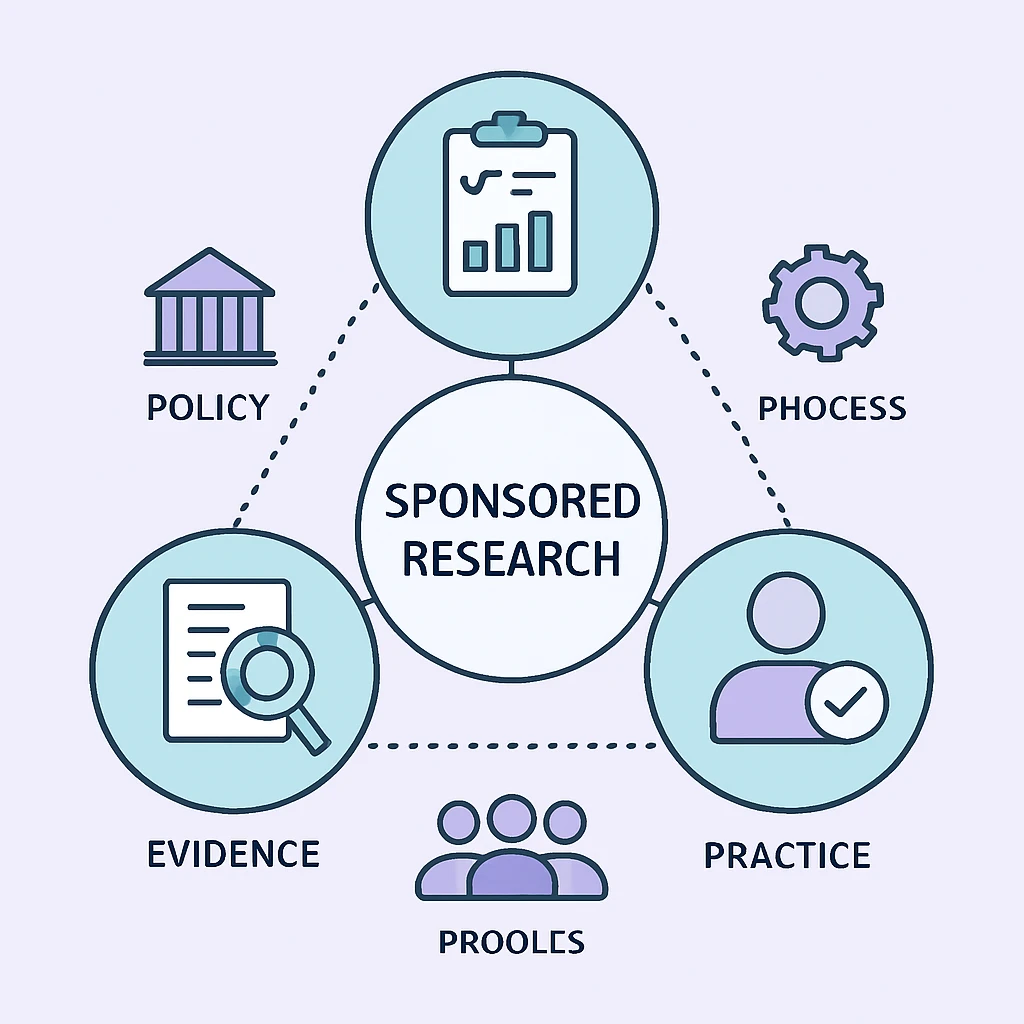
Defined term: Sponsored research is research supported through an external agreement that defines scope, funding, responsibilities, deliverables, and other terms. Administration connects sponsor expectations with institutional authority, investigator leadership, financial stewardship, and research integrity.
Scope becomes clearer when responsibilities, authority, records, and decision points are visible. The dimensions below show how the topic operates across the research enterprise.
Core dimensions
Each area requires policy knowledge, usable processes, clear ownership, and professional judgment.
Clear communication, accurate submissions, timely reports, and documented approvals support dependable sponsor interactions.
Proposals and awards can create obligations for facilities, personnel, cost sharing, data, intellectual property, security, and compliance.
Leaders need a reliable view of funding mix, workload, risk, performance, and capacity across the sponsored-research portfolio.
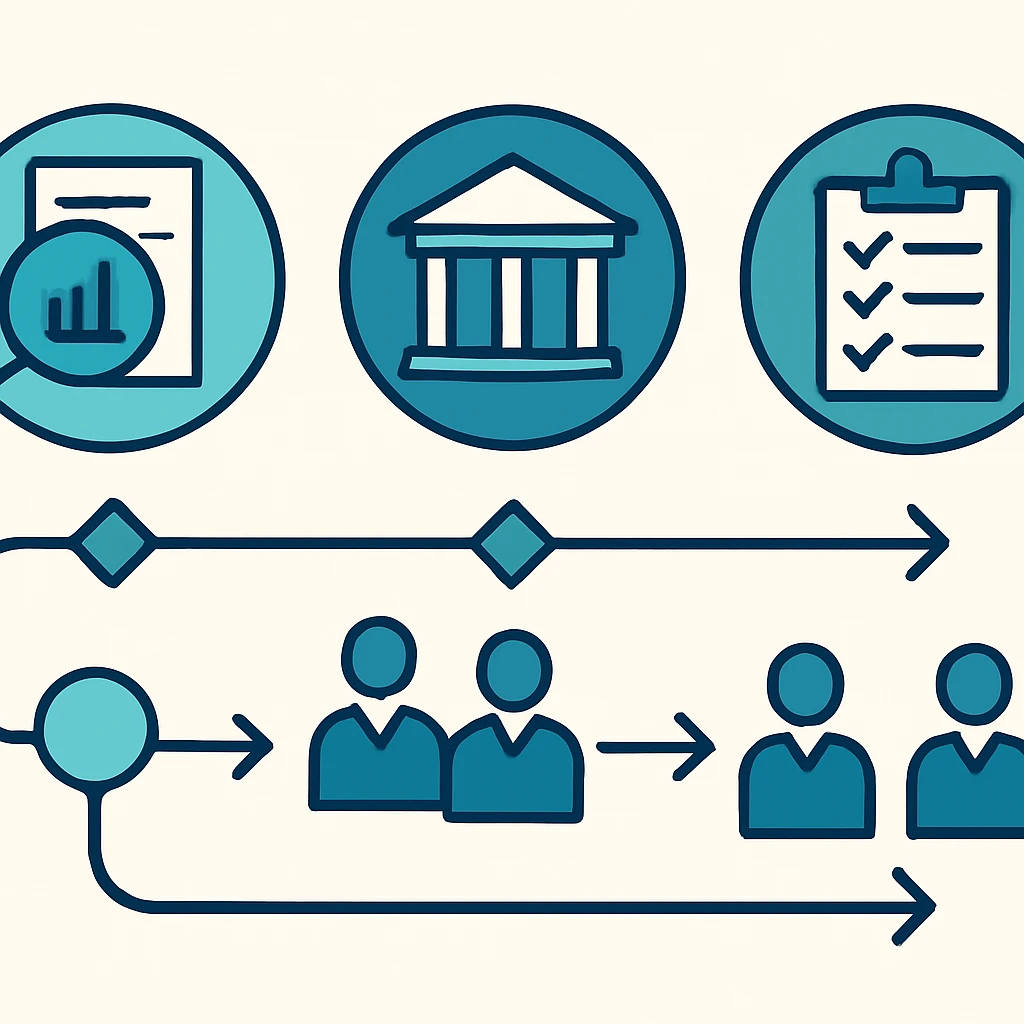
Local structures vary, but the work generally moves through a sequence of definition, review, authorization, performance, monitoring, and learning.

A sponsored programs office is most effective when it combines consistent controls with practical service. Policies, systems, training, and specialist judgment should make responsible action easier rather than merely add steps.
Measures should be defined carefully and interpreted with context. A faster process is not necessarily better when it creates rework, weakens oversight, or shifts hidden effort to another team.
Related resources
Use these routes to move from the broad topic into a focused workflow or decision.
Read the connected resource for deeper context, practical steps, and related questions.
Read the connected resource for deeper context, practical steps, and related questions.
Read the connected resource for deeper context, practical steps, and related questions.
Common questions
No. Support may arrive through grants, cooperative agreements, contracts, subawards, gifts, or other mechanisms, each with different obligations and authority.
Functions commonly include opportunity and proposal support, institutional approval, contract and award review, setup, monitoring, reporting support, training, and policy coordination.
Classification affects terms, accounting, compliance, intellectual property, deliverables, and which institutional office has authority to accept the relationship.
Sources
These external resources provide additional policy or practice context. The journal’s own published policies govern its workflow.
Move into a related guide, compare connected topic hubs, or search the journal archive for relevant records.