Journal operations
Process submissions, reviews, decisions, publication records, notifications, and support requests.

Personal data and journal systems
The journal uses personal data to operate reader, author, reviewer, and editorial workflows; protect account security; communicate about submissions and publications; and preserve the scholarly record. Data use should remain limited to a defined purpose, protected from unnecessary access, and retained only as long as the purpose or record obligation requires.
 journal privacy policy
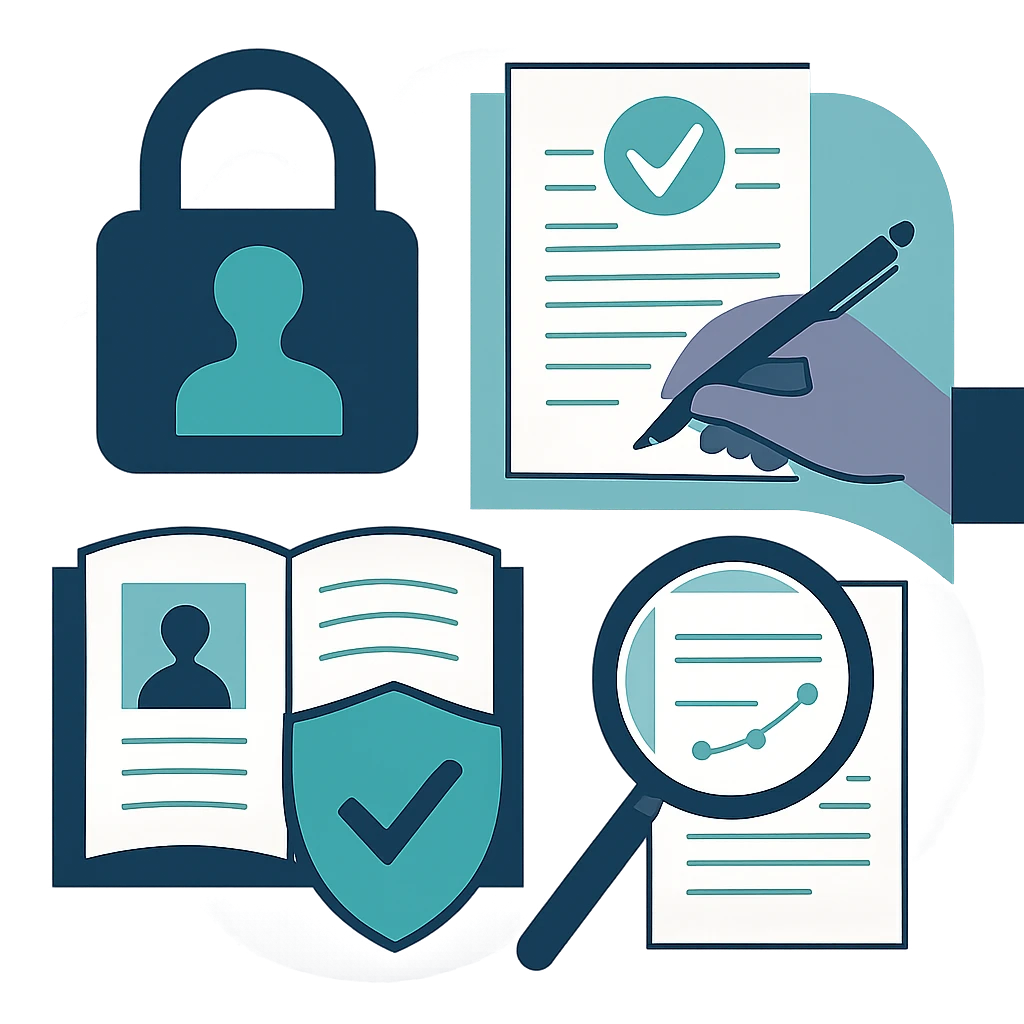
Account and workflow data may include names, email addresses, affiliations, country, ORCID iD, subject interests, role selections, login activity, correspondence, manuscript files, reviews, decisions, and publication metadata.
Basic technical logs and essential cookies may support security, session continuity, fraud prevention, and system performance. Optional analytics or marketing technologies should be identified separately and used only with an appropriate legal basis.
Key routes
Each route connects to the record or policy needed for the next decision.
Process submissions, reviews, decisions, publication records, notifications, and support requests.
Protect accounts, investigate misuse, manage conflicts, and preserve an auditable editorial history.
Publish author and article metadata that forms part of the version of record.
Practical detail
Some profile or notification data can be corrected or removed through account settings. Submission, review, decision, and publication records may need longer retention because they document editorial actions and the scholarly record.
A request concerning access, correction, deletion, restriction, or objection should include enough information to locate the relevant account or record. Identity may need to be verified before private information is disclosed or changed.
Common questions
Not necessarily. The journal may need to retain editorial and publication records that protect the integrity of the scholarly record.
Reviewer identity treatment follows the disclosed peer review model and confidentiality policy.
Author names, affiliations, identifiers, and disclosures may be part of the public publication record. Sensitive personal data should not be included unless necessary, lawful, and appropriately consented.
Sources
These external resources provide additional policy or practice context. The journal’s own published policies govern its workflow.
Describe the account, submission, or publication record involved so the journal can direct the request appropriately.