Risk-based governance
Institutions identify applicable requirements, assign authority, document decisions, and focus attention where consequences and uncertainty are greatest.

Research administration topic
Research compliance is the coordinated system of policies, oversight, training, review, monitoring, and response used to meet legal, sponsor, institutional, and ethical obligations in research. Effective compliance supports responsible work without treating every project as identical.
 research compliance

Defined term: Research compliance is the coordinated system of policies, oversight, training, review, monitoring, and response used to meet legal, sponsor, institutional, and ethical obligations in research. Effective compliance supports responsible work without treating every project as identical.
Scope becomes clearer when responsibilities, authority, records, and decision points are visible. The dimensions below show how the topic operates across the research enterprise.
Core dimensions
Each area requires policy knowledge, usable processes, clear ownership, and professional judgment.
Institutions identify applicable requirements, assign authority, document decisions, and focus attention where consequences and uncertainty are greatest.
Human subjects, animal care, biosafety, conflicts, export controls, research security, privacy, radiation, controlled substances, and other areas require qualified review.
Training, accessible advice, reporting routes, nonretaliation, investigation, corrective action, and learning all shape compliance effectiveness.
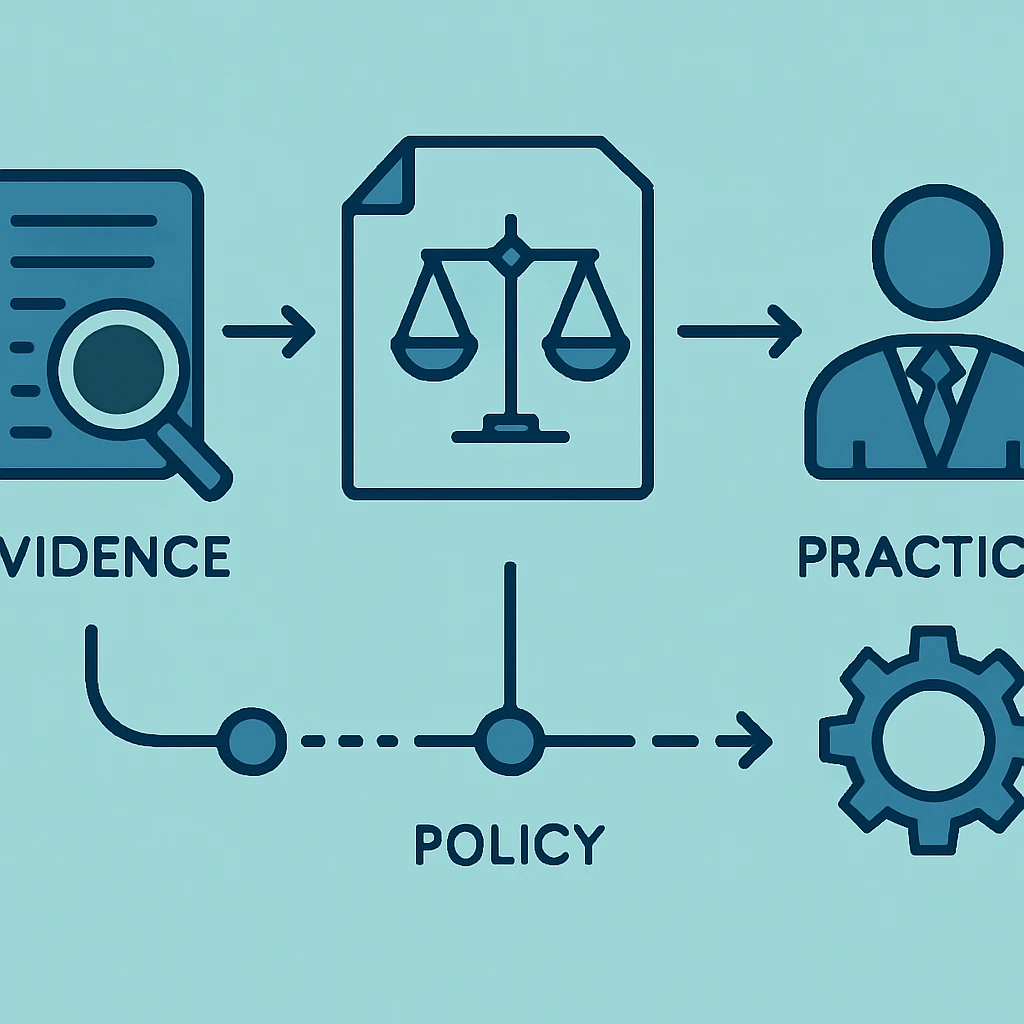
Local structures vary, but the work generally moves through a sequence of definition, review, authorization, performance, monitoring, and learning.

A compliance framework should distinguish preventive controls, detective monitoring, and corrective response. Completion rates alone are insufficient; institutions also need to assess comprehension, recurring exceptions, response quality, and whether researchers can obtain timely guidance.
Measures should be defined carefully and interpreted with context. A faster process is not necessarily better when it creates rework, weakens oversight, or shifts hidden effort to another team.
Related resources
Use these routes to move from the broad topic into a focused workflow or decision.
Read the connected resource for deeper context, practical steps, and related questions.
Read the connected resource for deeper context, practical steps, and related questions.
Read the connected resource for deeper context, practical steps, and related questions.
Common questions
No. Specialized offices provide oversight and expertise, but investigators, staff, departments, institutional officials, and administrators all hold defined responsibilities.
No. Monitoring should be proportionate to applicable rules, sponsor terms, complexity, prior issues, population or material sensitivity, and institutional risk.
Pause the affected activity when necessary and seek guidance from the responsible institutional authority before assuming that a rule does not apply.
Sources
These external resources provide additional policy or practice context. The journal’s own published policies govern its workflow.
Move into a related guide, compare connected topic hubs, or search the journal archive for relevant records.