
Research Administration Insights
The University Technology Transfer Process
The university technology transfer process helps move discoveries toward public use while addressing ownership, sponsor obligations, inventorship, protection, development, and licensing. The path begins with timely disclosure and may lead to a patent, copyright strategy, software license, material transfer, startup, open release, or no further action.
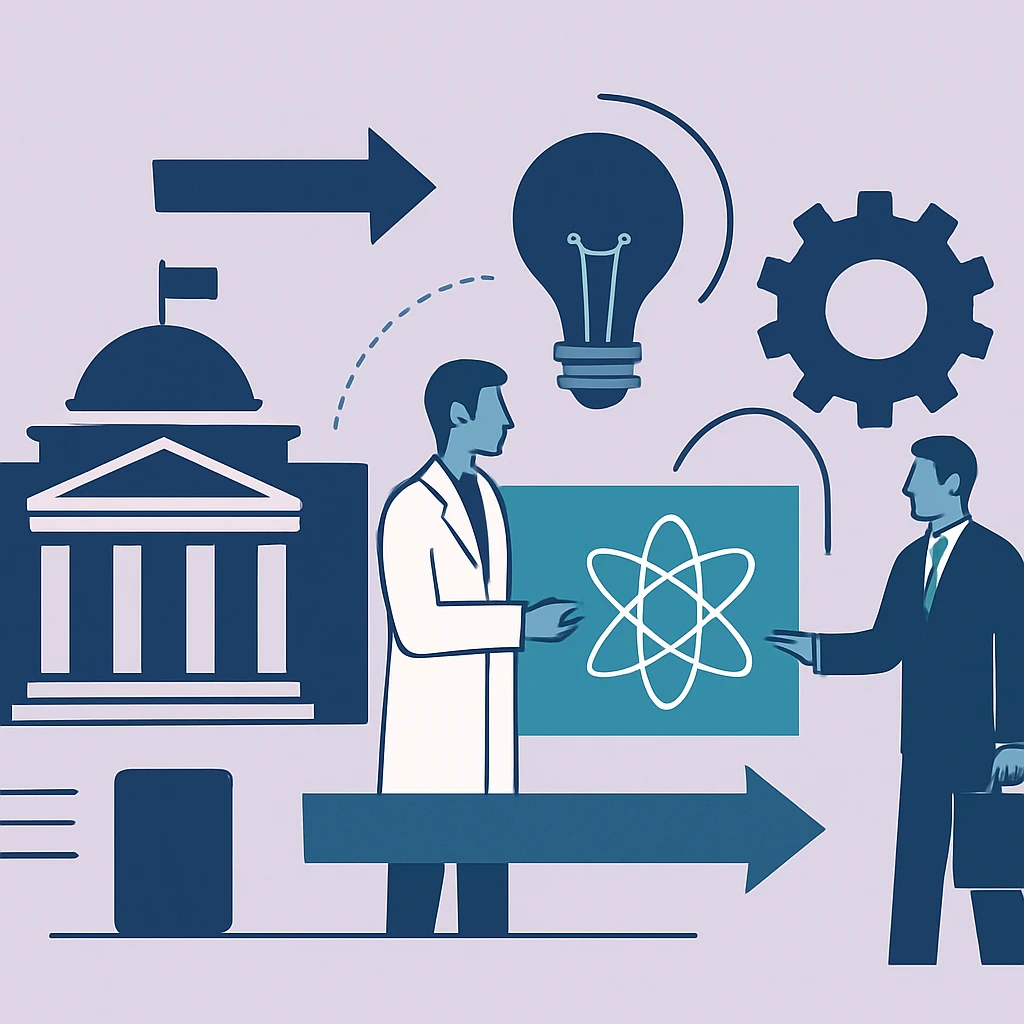 university technology transfer process

Disclose before a public event closes options
Researchers should disclose inventions, software, creative works, materials, or other potentially transferable outputs before publication, presentation, public posting, sale, or external transfer. Early notice gives the institution time to review rights and deadlines.
A disclosure is not a patent application and does not guarantee commercialization.
Review rights, obligations, and contributors
The office examines inventorship or authorship questions, institutional policy, sponsor terms, employment obligations, collaboration agreements, material or data restrictions, and prior disclosures.
Inventorship is a legal determination tied to patent claims and is not identical to authorship or project leadership.
Assess protection and development path
Evaluation may consider technical readiness, evidence, alternatives, potential users, public benefit, market, development cost, regulatory path, competition, and partner interest.
Some work needs additional validation; some is better shared through open or nonexclusive approaches.
Negotiate and manage an agreement
Licensing addresses rights, field, territory, diligence, milestones, financial terms, sublicensing, reporting, publication, and public-interest considerations. A startup also needs management, capital, conflict, and institutional-relationship planning.
After signature, the office monitors obligations and distributes revenue according to policy and agreement.

Practical Review Checklist
Use this checklist to prepare the conversation, record, or workflow before a deadline or formal review.
- Disclose before public release.
- Identify funding, collaborators, materials, and prior agreements.
- Separate authorship from inventorship analysis.
- Match protection strategy to the actual path to use.
- Track license diligence and reporting after execution.
Common questions
Questions Readers and Contributors Ask
Does disclosure prevent publication?
Not necessarily. Early disclosure can allow protection decisions to occur before publication while preserving the research team’s publication plan.
Will every disclosure be patented?
No. Cost, protectability, readiness, public benefit, and development pathway vary.
Can a faculty inventor negotiate alone with a company?
Institutional rights and authority must be respected. The technology-transfer or authorized contracting office should handle institutional agreements.
Sources
Sources and Authoritative Guidance
These external resources provide additional policy or practice context. The journal’s own published policies govern its workflow.
Related reading
Continue With Connected Resources
Use these internal routes for a broader topic view or a closely related workflow.
Technology Transfer
Continue into the connected resource for definitions, context, and practical detail.
Research Impact and Evaluation
Continue into the connected resource for definitions, context, and practical detail.
Sponsored Research
Continue into the connected resource for definitions, context, and practical detail.
Apply the Guidance With the Governing Record in View
Confirm current sponsor terms, institutional policy, and responsible-office authority before acting on a real project.